Media Buying Risk: What Agencies Commonly Underestimate
Media buying risk controls for daily operators: attribution noise, compliance, billing, access, and governance. Practical checks for stability and CPA control.

By The Adtucon team
Updated
Media buying risk rarely comes from one dramatic mistake. It usually comes from small assumptions that never get challenged: how budgets are authorized, where signals come from, who controls accounts, and what you do when CPA drifts and volume stability breaks.
Most agencies obsess over creative, targeting, and bid tweaks, but underestimate the operational and contractual details that determine whether results are real, repeatable, and defensible under scrutiny. In practice, risk shows up as disputed invoices, sudden account restrictions, attribution noise, and client trust erosion when performance swings.
This article breaks down the most overlooked media buying risk areas and the controls that reduce exposure while keeping iteration cycles fast and budget allocation decisions clean.
Why media buying risk is bigger than performance
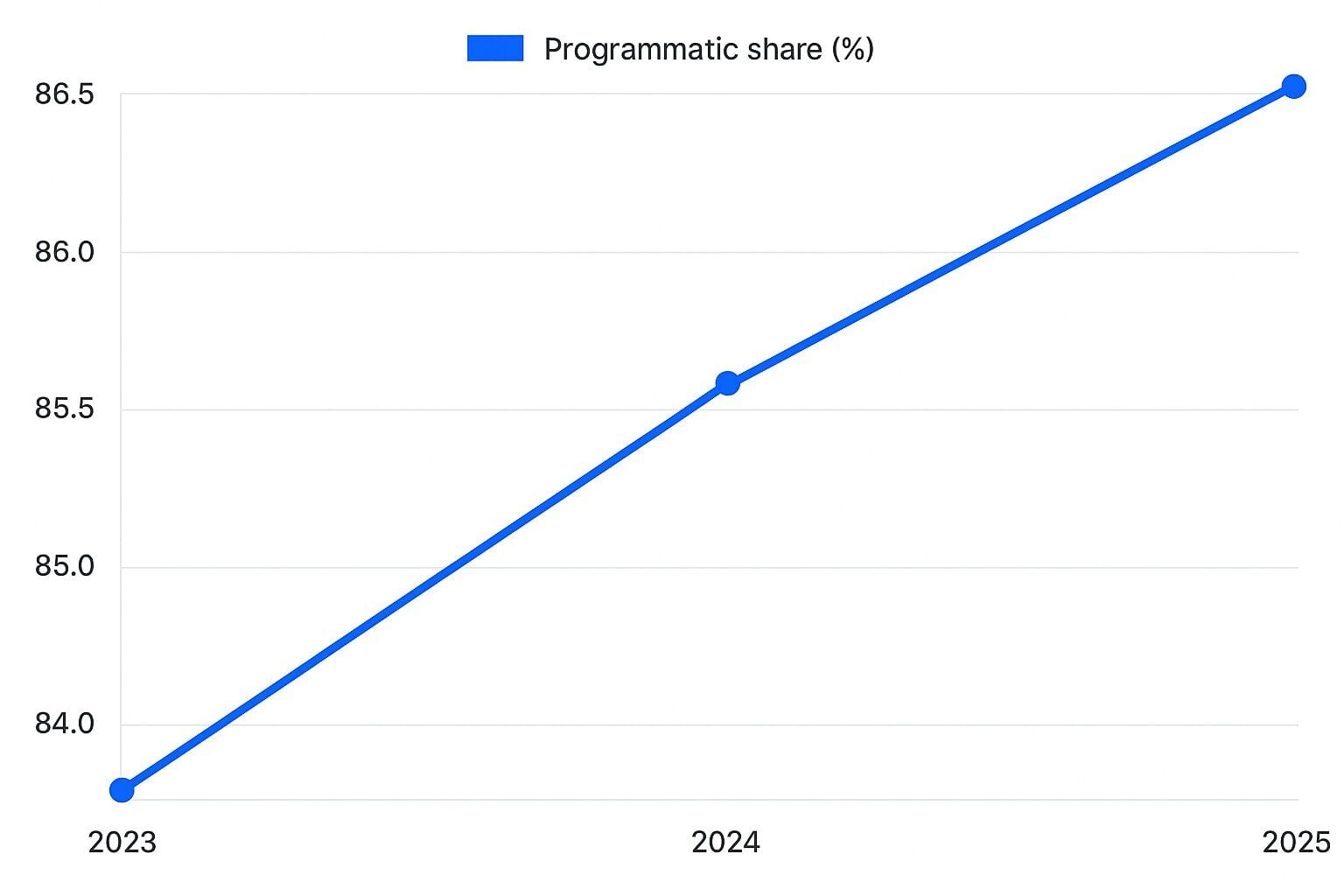
When risk control is weak, even strong ROAS can be fragile. Policies shift, auctions move, signal decay accelerates, and partners underdeliver. Resilient teams treat buying as a controlled system, not a set of toggles in an ad manager.
The highest impact risks tend to sit outside the UI: financial liability, data integrity, platform compliance, and account ownership. If any of these are unclear, you can end up responsible for costs you cannot reconcile, or results you cannot prove with decision grade reporting.
Risk compounds with scale. As spend climbs, small leakage becomes material, and weak processes become single points of failure. The goal is not to eliminate uncertainty. The goal is auditability, faster detection, and predictable response when performance drops unexpectedly.
How to build a practical risk control process
A strong process converts risk into checks that run before launch, during delivery, and at billing. The best systems stay lightweight enough to run daily, but strict enough to catch issues before they turn into budget burn or compliance downtime.
A repeatable pre flight checklist
to find out what fits.
Start in chat- A person on chat$0
- Vertical checked$0
- Account opened$0
- Account certified$0
- Replaced if it falls$0
Use this baseline before scaling spend, adding a new channel, or accelerating testing velocity. Each step reduces ambiguity and improves the quality of optimization decisions.
- Confirm account ownership and admin access: Ensure the client owns the ad accounts and pixels, and your team has the right roles. This matters because access disputes and offboarding conflicts are common failure modes.
- Define the source of truth for performance: Decide which numbers govern optimization and invoicing (platform, analytics, server side events, CRM). This matters because mismatched reporting creates false positives and wasted budget.
- Map conversion events to business outcomes: Verify events represent real value (qualified lead, purchase, retained user). This matters because optimizing to the wrong event produces impressive dashboards and weak revenue.
- Document budget authorization and pacing rules: Capture who approves spend changes, how quickly you can shift budget, and what thresholds trigger action. This matters because unmanaged pacing can breach client constraints or miss demand windows.
- Set platform policy safeguards: Review creative, landing pages, and claims for compliance. This matters because account suspensions often happen after scaling, when the cost of downtime is highest.
Actionable insight: create a one page risk register per client that lists the top 5 risk items, the owner of each control, and the verification cadence. This clarifies accountability and prevents everyone thinking someone else checked it.
What agencies underestimate most (and how it backfires)
Underestimation usually comes from assuming partners, platforms, and data behave consistently. In reality, systems fail at the edges: invoice timing, attribution gaps, and policy enforcement are uneven. These are the recurring blind spots.
Attribution ambiguity drives bad decisions. If you optimize using platform reported conversions without validating incrementality or downstream quality, you will reallocate budget toward campaigns that look efficient but produce low value customers, higher refunds, or lower retention.
Hidden fees and supplier incentive schemes create misalignment. If a buying path includes undisclosed margins, made for advertising inventory, or opaque service layers, performance variability increases and brand risk rises.
Data loss and tracking degradation are now default conditions. Cookie restrictions, consent settings, and mobile privacy changes can shift reported CPA overnight. Without a plan for measurement resilience, you will chase noise with budget and misread creative fatigue or audience saturation.
Account structure fragility is another common issue. A single ad account, single pixel, or single payment method becomes a bottleneck. When something gets flagged, everything stops, and recovery timelines are uncertain while spend sits idle.
Actionable insight: run a monthly variance review that compares platform performance to analytics and CRM outcomes. Investigate any material gap, and document whether the driver is tracking, lead quality, or reporting windows.
You hear it from a person.
- You hear it from a person, with what the platform told us. We read why it happened, fix what can be fixed and resubmit with you.
- If the account can't come back, you get a new one at no charge.

Optimization that reduces risk while improving results
Risk reduction and performance improvement are aligned. Controls speed up decisions because numbers become more trustworthy, and escalations become evidence based instead of emotional.
Where the money sits and what is still spendable.
- USD wallet5 days left8 days left
Treat measurement as a product. Implement triangulation across at least two independent systems, and define which one is used for which decision. Example: use platform signals for in week optimization, and use analytics plus CRM for weekly budget allocation and scaling constraints.
- Implement server side tracking where appropriate: It improves event reliability under privacy constraints, which matters for stable learning and fewer false declines in performance.
- Build creative compliance gates: Pre approve claims, testimonials, and landing page language. This matters because policy issues often scale with volume and can cause sudden delivery loss.
- Use controlled experiments: Run incrementality tests or geo splits when feasible. This matters because it separates correlation from causation and reduces wasted spend on non incremental conversions.
- Standardize naming and documentation: Enforce campaign naming, UTM rules, and change logs. This matters because it enables auditing, faster debugging, and clearer learning transfer across accounts.
- Create escalation playbooks: Define what to do for disapprovals, spend spikes, attribution drops, or billing disputes. This matters because response speed often determines whether an issue is a nuisance or a crisis.
Ask for accounts, each in its own market and time zone.
Actionable insight: adopt a two layer KPI model with optimization KPIs (CTR, CPC, event volume) and business KPIs (qualified pipeline, CAC, payback). Review them on different cadences so you do not optimize for the wrong time horizon.
Actionable insight: require a weekly what changed summary that lists budget shifts, targeting changes, creative swaps, and tracking changes. When performance moves, you can isolate the driver instead of guessing.
Actionable insight: set guardrails for automated bidding and broad targeting, such as maximum CPA thresholds and minimum data requirements before scaling. This protects CPA control and reduces volatility when algorithms learn on low quality signals.
Media buying risk becomes manageable when it is visible, measurable, and owned. The teams that outperform in volatile environments treat controls as part of delivery, not as paperwork.
By tightening account governance, strengthening measurement, and documenting decision logic, you reduce disputes, stabilize performance, and build client relationships on proof.
If you want help building a risk-aware media buying system that protects spend and improves outcomes, Contact us
$13.2M in October, more than 4x since April 2026.
How we count- 500+client teams
- 19client teams above $100k in the last 30 days
- 50client teams above $10k in the last 30 days
Client ad spend on Meta, TikTok and Snapchat, without our own group companies and unattributed spend, to 31 October 2026.
Stop reading. Start spending.
We tell you what fits before you pay anything. Agency ad accounts by platform
Chat on TelegramPrefer WhatsApp? We're there too.
- A person on chat$0
- Vertical checked$0
- Account opened$0